
40 Anni Di Finagricola: Al Via “Una Storia Di Qualità”, La Collana Di Podcast Che Racconta Una Delle Eccellenze Dell’agroalimentare
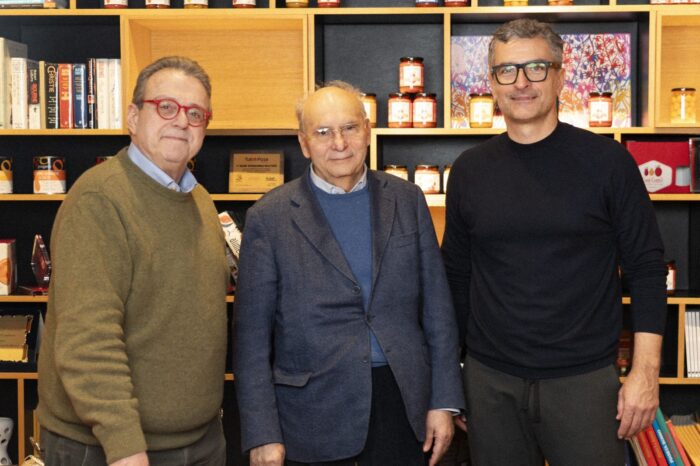
Gerardo Palo, founder and president: «What’s the secret to growth? Being afflicted with optimism»
Forty years of agricultural history, innovation, and a connection to the land are narrated directly by the key players. This is the essence of the inaugural episode of the podcast series “A Story of Quality,” a new editorial initiative dedicated to the experience of Finagricola, one of the gems of Italian agri-food.
The podcast, endorsed by Finagricola, originates from an idea by Domenico Catapano, the company’s marketing manager. The project is produced by Gruppo Stratego Società Benefit and executed by StrategoDigital.com. Through interviews, testimonials, and corporate stories, it retraces the forty years of the cooperative’s activities in the Piana del Sele.
The first episode, available on major podcast platforms (https://linktr.ee/unastoriadiqualita YouTube, Spotify, Amazon Podcast) – is hosted by Marco Frittella, director of Make Different Magazine, with interviews conducted alongside Gruppo Stratego journalist Benedetta Gambale.
The project “Finagricola – A Story of Quality” features contributions from Finagricola’s president, Gerardo Palo, and Catapano himself, who are central to a narrative that explores the company’s origins, insights, and innovations. Amid the colors and aromas of various tomato types – red, yellow, and orange datterino – unfolds the story of one of the most significant entities in Italian horticulture, which emerged in the Piana del Sele, now recognized as one of Italy’s “gardens.”
Reflecting on the cooperative’s beginnings, President Gerardo Palo recalls how it all stemmed from a deliberate choice: to collaborate in producing quality.
«At the foundation was a vision: working together is more effective than working alone, because alone, you get nowhere,» he shares. «A group of entrepreneurs decided to combine their skills and specializations to cultivate top-quality vegetables, focusing on healthiness and protected cultivation methods.» From the outset, Finagricola has invested in greenhouse farming, enhancing production control and the quality of the cultivated varieties intended for large-scale distribution.
In the president’s narrative, one of the essential elements of agriculture emerges: time. «In agriculture, patience is crucial,» explains Palo. «You plant, wait for the seed to sprout, grow, and bear fruit. You cannot alter nature’s timing.» Patience thus becomes an essential virtue not only for fieldwork but also for building a solid and enduring business, now shared with his children who work alongside the president.
Over the years, Finagricola has developed numerous horticultural products, but the tomato has become the true emblem of the company, particularly the datterino, valued both fresh and processed. Domenico Catapano, in his role as marketing manager, also discusses this, as he strives to convey this complexity in a narrative accessible to various audiences. «Telling the story of Finagricola is not straightforward,» he explains. «It’s a company with many facets, numerous products, and diverse audiences: we need to communicate with the end consumer as well as the supply chain operators.»
The processed production is divided into two distinct brands: Grangusto, aimed at the horeca sector and restaurant professionals, and Così Com’è, designed for large-scale distribution and the end consumer. This line has over the years highlighted various tomato varieties – including red, yellow, and orange datterino and pizzutello – while maintaining a focus on the quality of the raw materials. Among the company’s most appreciated products, featured in the podcast, is the double-concentrated tomato paste.
Many anecdotes are shared in the first episode. «At the beginning of our canning operations – Palo recounts – a customer picked up the goods about twenty days late. We found ourselves with around 5,000 quintals of datterino that we didn’t know how to place.» From that unexpected situation arose the idea to process the tomatoes: «From a problem came an opportunity,» the president explains. The product also evokes a widely practiced domestic tradition in Southern Italy: homemade tomato preserves.
Among the latest innovations is the inclusion of recommended cooking times on the label. «Each product has its own cooking time: we have 4 minutes, for instance, for the yellow datterino velouté, and 7 for the pizzutello puree. After numerous tests, we determined the optimal cooking time for each product,» Catapano explains. «Many are accustomed to the long sauces of tradition, but some tomato varieties express their flavor best with shorter cooking times.» The goal is to preserve the organoleptic characteristics and enhance the quality of the raw materials.
«Optimism is not naivety; it is the essential condition for anyone in business,» concludes founder Gerardo Palo. «And I want to remain afflicted with optimism until the end.»
